

Journal · Field notes
Documenting Phu Quoc, after the renovation.
Published May 10, 2026 · Updated July 19, 2026
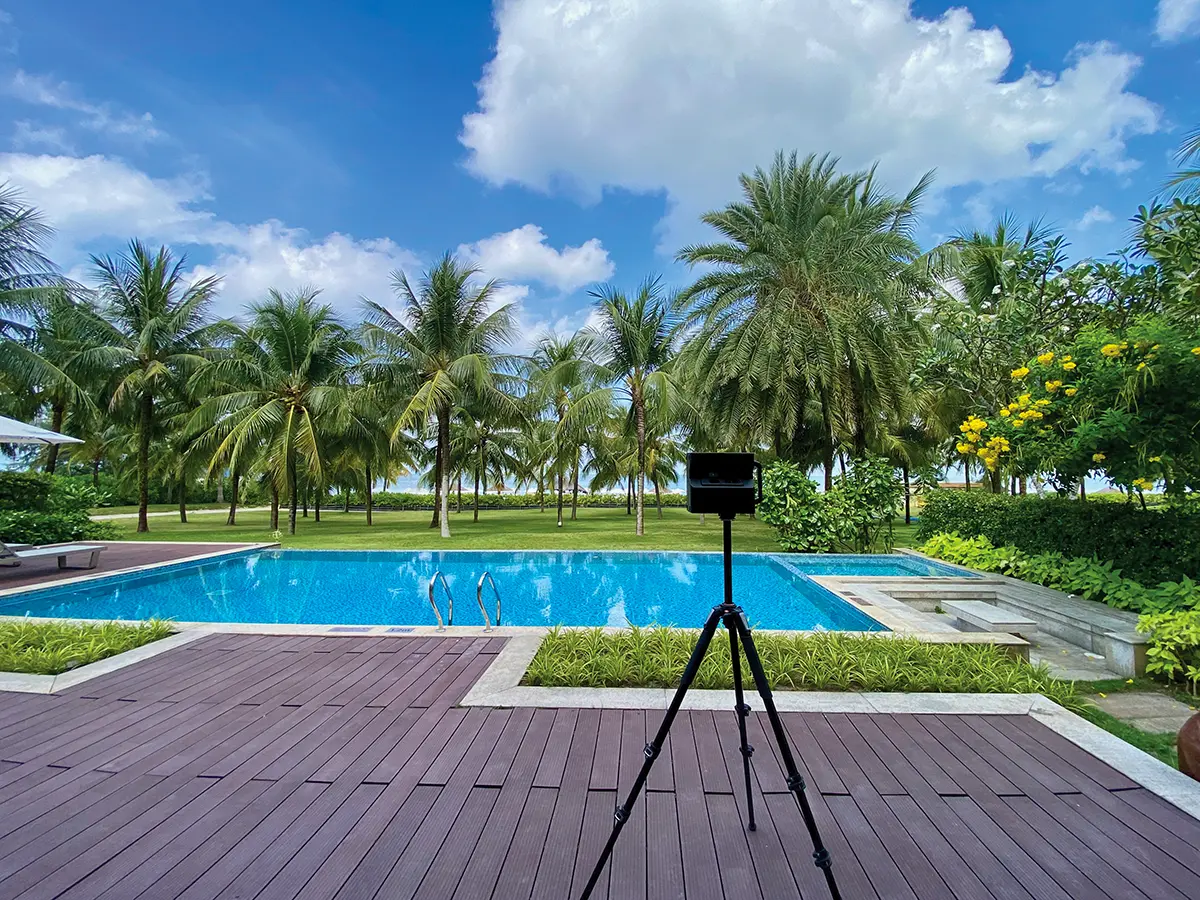
Heavily edited resort photography creates a real credibility gap: rooms that look bigger than they are, lighting that never quite matches reality. A Matterport tour is an unedited record of the actual space, which is exactly what an event planner or a family deciding on a destination wants before booking a flight.
In March 2026, this meant returning to Radisson Blu Resort Phu Quoc to document updated villas after a renovation. Five-star properties often need a rescan after a refresh, to keep their own marketing collateral current.
A tightly narrow capture window
Breakfast service here starts at 6:30am, and Vietnamese pool culture means people of every age are already in the water at sunrise. Capturing the public pools and exterior pathways without getting in anyone's way meant working well before dawn. Any guest who ends up in frame regardless gets fully blurred in post. Nobody signs up to appear in international marketing while in their swimwear.
Why a hotel group flies someone in rather than hiring locally
Radisson properties documented so far span Lonavala, Mohali, Srinagar, Dubai, and Bangkok, alongside Cam Ranh and now Phu Quoc. Brand familiarity is a real reason a hotel group prefers a technician who already understands their specific compliance standards over hiring someone new each time. Matterport's own APAC office, based in Singapore, is what allocates India-based Capture Technician work in the first place, which is part of how that continuity happens.
On tooling specifically: heavier third-party overlay tools exist in this space, but sticking to Matterport's native features keeps the final files noticeably lightweight, which matters directly for a guest trying to load a tour on an unpredictable hotel Wi-Fi or mobile connection.
A real, current note on visas, since this matters to actual travel plans
To be precise here rather than repeat outdated advice: as of April 2026, Vietnam tightened Phu Quoc's visa exemption specifically to close a routing loophole. Previously, a connecting flight through Bangkok, Ho Chi Minh City, or Kuala Lumpur that ended at Phu Quoc still qualified for the 30-day visa-free entry. That's no longer true. As things stand now, only a genuine nonstop international flight landing directly at Phu Quoc International Airport qualifies. A one-stop itinerary, even one ending at Phu Quoc, now requires a Vietnam e-visa in advance. Worth checking current rules directly before booking, since travel policy is exactly the kind of thing that changes without much warning.
A few observations
Phu Quoc has historically leaned toward Western tourism, but a noticeable, visible increase in Indian families has shown up recently, whether as a fresh alternative to typical Middle East beach destinations or just for the beaches themselves. The team here remembered the workflow from a shoot two years earlier and cleared zones without needing to be walked through it again, which made the whole trip considerably smoother. Between pre-dawn scans, the crew kept the energy up with Trà Sữa Truyền Thống, traditional Vietnamese iced milk tea with chewy tapioca pearls, exactly what a 5am start calls for.
Following this project and the earlier one in Cam Ranh, extending the zero travel cost policy to parts of Vietnam is something worth seriously exploring. Not confirmed yet, but a real possibility given the pattern so far.
Planning a property scan outside India? Qatar, the UAE, Vietnam, and Sri Lanka are all already on the record here. Ask about an international scan
Before you ask
Worth knowing.
Do Indian citizens need a visa to visit Phu Quoc in 2026?
As of April 2026, only a genuine nonstop international flight landing directly at Phu Quoc qualifies for the 30-day visa exemption. Connecting flights through Bangkok, Ho Chi Minh City, or Kuala Lumpur no longer qualify, even if the final stop is Phu Quoc. A Vietnam e-visa is now required for those routes.
Why does an international hotel group fly a technician from India rather than hiring locally?
Brand familiarity matters. A technician who already understands a hotel group's specific compliance standards and has worked their properties before tends to move faster and anticipate issues better than someone new to the brand.
How is guest privacy handled during an active resort shoot?
Capture is scheduled for the narrow dawn window when public areas are mostly empty. Any guest who ends up in frame regardless is fully blurred in post-production before anything is published.
Related
Where this connects.
Start a project
Tell us about the space, and we'll tell you what it'll take.
Most replies come within a day. Most enquiries start with a short email about the space.
Email info@adostrophe.com