

Journal · Guide
Matterport and 3D scanning, explained properly.
Published September 5, 2025 · Updated July 19, 2026
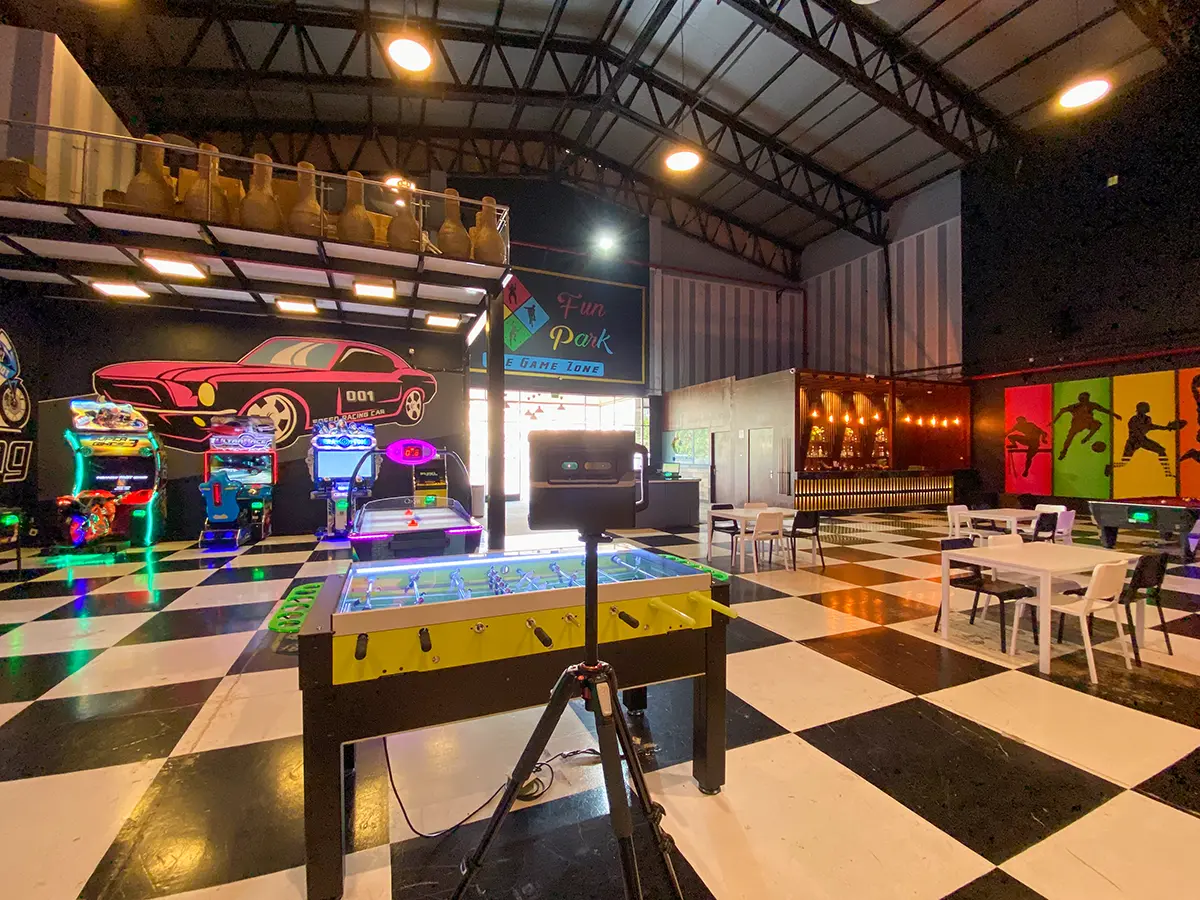
Most guides to 3D scanning either oversimplify it into "just point your phone" or bury it in jargon. This is an attempt to explain what's actually happening, and what actually matters, whether you're capturing your first room with a smartphone or deciding what hardware to buy for real work.
Two ways a 3D model gets built
The Matterport Capture app builds a model one of two ways, depending on the hardware:
Photogrammetry (standard phones and 360° cameras): the app compares overlapping 2D photos and infers depth from the parallax between them. It works, but it's processor-heavy and can drift, meaning measurements slowly become less accurate, in large or feature-poor spaces like long, plain corridors.
Active depth sensing (Pro2, and LiDAR-equipped iPhones and iPads): the hardware projects infrared light or a laser and measures the real geometry directly. This is what makes dimensionally accurate output possible, though "dimensionally accurate" has real limits, more on that below.
Getting a clean capture
A few things actually matter on-site: declutter and turn all the lights on before you start (uneven lighting throws off the mesh more than people expect), keep the camera's rotation point fixed as you move between shots, and end the scan close to where you started. That "loop closure" is what lets the software correct small drift that's built up over the walk.
What hardware actually costs, and what it's for
| Hardware | Approx. cost | Best for |
|---|---|---|
| Ricoh Theta SC2 / X | ₹25,000–50,000 | Basic residential listings, early insurance documentation |
| Ricoh Theta Z1 | ₹95,000–1.1L | Sharper residential work, low-light hospitality spaces |
| Matterport Pro2 | ₹2.8L–3.5L | Commercial interiors and AEC documentation, 134MP |
Rough Q1 2026 Indian market pricing, worth confirming current numbers before buying.
How accurate is a Matterport scan, actually?
Rather than repeating marketing language: real-world measurements taken off a Pro2 scan typically land within about six inches of the true distance, which means a room's overall dimensions can be off by up to roughly a foot in practice. That's accurate enough for space planning, furniture layout, and most facilities or real estate use. It is not survey-grade, and it shouldn't be treated as one for anything requiring tight engineering tolerances.
That's not a limitation unique to any one operator. It's the practical ceiling of this class of hardware, worth remembering before assuming a 3D scan replaces a professional survey for anything load-bearing or structural.
The JK Tyre plants in Gwalior and Chennai, just over ten lakh sq ft between them, were both documented entirely on a Pro2, at exactly this level of accuracy.
Where this gets used, beyond real estate listings
Two real applications: publishing panoramic images to Google Street View, which meaningfully helps local search visibility for retail and hospitality businesses; and heritage documentation, where a scan becomes a permanent record of a space, useful for research and, if the building is ever damaged, for restoration.
Anything involving recognizable faces or vehicle license plates needs blurring before it's made public, and any government or heritage site (an ASI-protected monument, for instance) needs proper permission before it's scanned at all. Not a formality to skip.
Before spending money on hardware
A few realities before buying a Pro2 outright: owning the camera doesn't guarantee work. The secondary market has a fair number of these being resold by people who bought in without enough client demand to justify it. And on the "authorized partner" question specifically: Matterport doesn't run a partner-certification program in India, so a business calling itself an "Official Partner," or using "Matterport" inside its own domain name, isn't something you can verify against any real directory. Worth checking the work itself instead.
Updated July 2026: the accuracy figures above reflect real, current, hands-on experience with the Pro2, not a spec sheet. This guide will get a genuine update if that changes.
Before you ask
Worth knowing.
How accurate is a Matterport scan, really?
In practice, measurements are typically accurate to within about six inches, which means overall room dimensions can vary by up to roughly a foot. Good enough for space planning and real estate; not a substitute for a professional survey on anything structural.
Is Matterport officially supported in India?
The hardware and app both work fine here, but there's no official 'authorized partner' program to check a provider's claims against. That program was discontinued.
What's the real difference between a 360° photo and a full 3D scan?
A 360° photo is one static image from a single point. A full scan connects many points using real depth data, so you can walk between them and measure distances.
Does the Matterport app work properly on Android?
Yes, though almost no Android phones have the depth sensors iOS Pro devices do, so it relies entirely on photogrammetry. Expect longer processing time for the app to align everything.
Start a project
Tell us about the space, and we'll tell you what it'll take.
Most replies come within a day. Most enquiries start with a short email about the space.
Email info@adostrophe.com