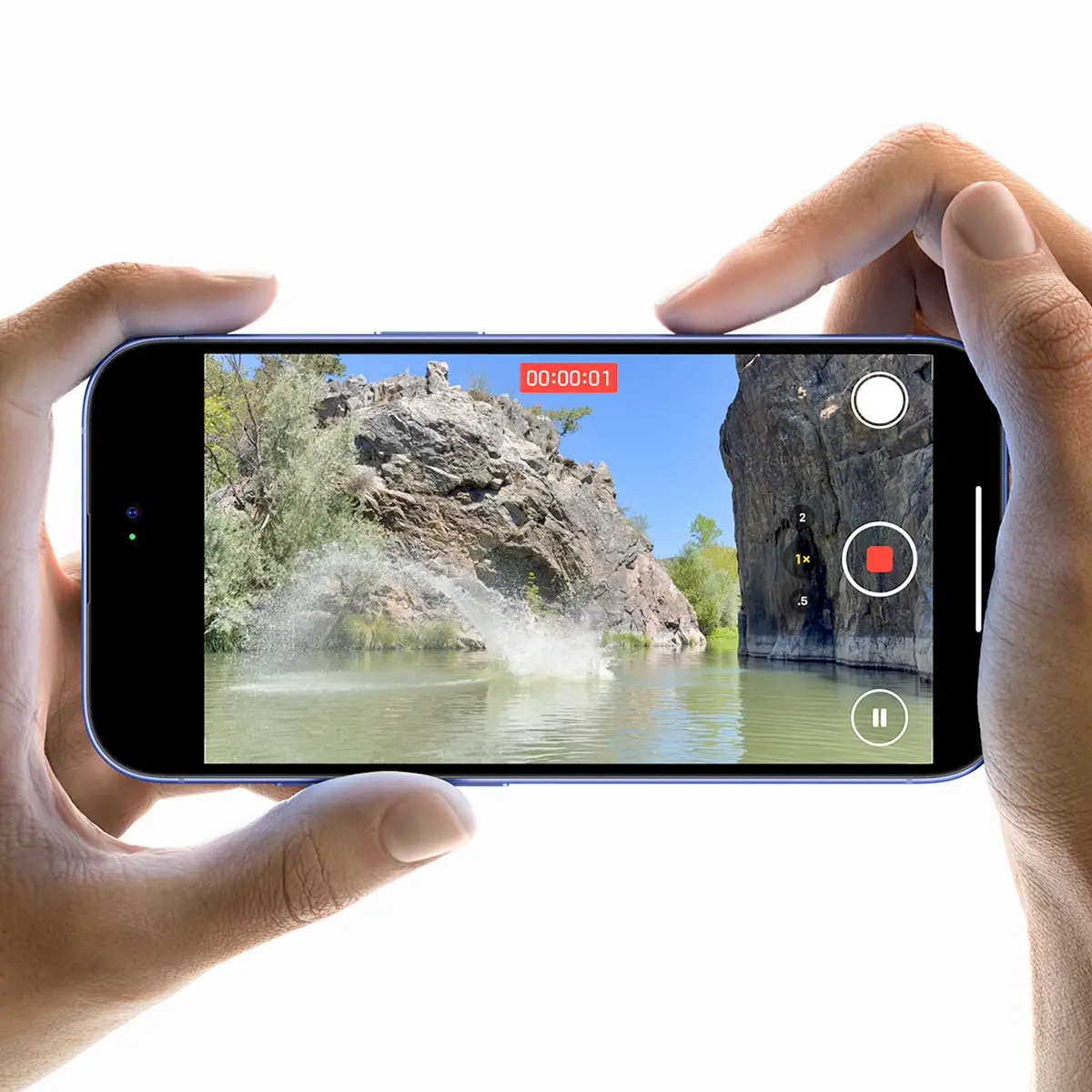

The iPhone 17 Pro, released September 19, 2025, integrates significant hardware upgrades engineered to support on-device artificial intelligence processing ("Apple Intelligence") and spatial computing workflows. This technical analysis evaluates the core architectural modifications, including the A19 Pro SoC, expanded memory allocation, and the revised thermal management system.

1. Foundational Architecture: Processing and Memory

The internal architecture is optimized for localized AI model execution. Consequently, the baseline storage capacity is established at 256GB to accommodate local AI data requirements. This hardware-centric approach minimizes external server processing, maintaining data localization.

The device integrates 12GB of LPDDR5X RAM, representing a significant expansion from the previous 8GB standard. [4] Independent technical audits confirmed this specification post-release. [5] This memory allocation is a mandatory prerequisite for stable execution of concurrent on-device AI operations and high-bandwidth sensor data processing.

Expanded memory capacity directly impacts professional deployments, particularly spatial documentation. Matterport scanning operations utilizing mobile hardware are highly dependent upon available system memory for data point alignment and processing stability. [6] The integration of 12GB RAM mitigates application failure during high-density capture sequences.

Thermal management for the A19 Pro SoC and expanded memory architecture utilizes a graphene vapor chamber. This enclosed system facilitates rapid heat dissipation via liquid vaporization and condensation. This structural modification delays thermal throttling, ensuring sustained processing output during extended data capture or rendering operations. [1]

2. Pro Fusion Sensor Array

The optical array standardizes sensor resolution across all three rear-facing lenses (Main: 24mm equiv., Ultra Wide: 13mm equiv., Telephoto), utilizing 48-megapixel sensors for each. This design paradigm prioritizes uniform data acquisition and color science across the entire focal range.

The Telephoto array utilizes a tetraprism optical assembly, achieving an 8x optical-quality zoom (200mm equivalent) via a folded light path. Low-light data acquisition across these high-density sensors is managed via algorithmic interpolation:

  • Pixel Binning: Aggregates data from four adjacent sensor pixels into a singular, high-fidelity data point. This process outputs a 12MP image with significantly reduced digital noise.
  • Image Stacking (Deep Fusion): A multi-exposure capture protocol. Algorithmic processing aligns sequential frames, extracting high-fidelity data points to generate a composite image optimized for exposure and detail resolution.

3. High-Fidelity Video Encoding

The device supports native ProRes RAW video encoding. This format preserves uncompressed sensor data, providing maximum manipulation parameters during post-production workflows. [2]

Integration of Genlock and timecode protocols (via compatible external hardware) permits synchronization with professional cinema camera arrays. This functionality, combined with 4K 120fps Dolby Vision encoding, establishes the device as a viable component within multi-camera commercial deployments.

Algorithmic interpolation of multi-lens sensor data.
Algorithmic interpolation of concurrent data streams from multiple lenses to generate a synthetic spatial camera path.

Advanced algorithmic processing utilizes the A19 Pro Neural Engine to synthesize concurrent data streams from all three lenses, generating interpolated frames to simulate a spatial camera arc ("bullet time" effect).

4. Spatial Computing Ecosystem Integration

The hardware architecture is engineered to function as a primary data acquisition node for the Apple Vision Pro platform. Software integrations between iOS 26 and visionOS 26 facilitate specific spatial workflows. [3]

  • Spatial Scene Generation: Generative AI algorithms utilize LiDAR and sensor depth data to translate standard 2D imagery into immersive spatial formats for Vision Pro deployment.
  • 3D Asset Integration: The device's LiDAR and photogrammetry capabilities facilitate the generation of 3D assets for direct embedding into web architectures, enabling interactive spatial viewing.
  • Immersive Video Acquisition: The 48MP Ultra Wide sensor array, coupled with A19 Pro processing, supports the capture of native 180-degree and 360-degree video content for the visionOS 26 platform.

5. Data Acquisition Protocols: Google Local Guides

The integrated sensor array and dedicated Camera Button establish the device as a high-efficiency tool for localized data acquisition (e.g., Google Local Guides mapping contributions).

The pressure-sensitive, two-stage Camera Button provides tactile control over focus and exposure parameters, facilitating rapid image capture and immediate video recording initiation. This hardware interface minimizes operational friction during on-site documentation.

The hardware specifications (LiDAR, A19 Pro, 12GB RAM) that support professional workflows also enable the rapid generation of detailed Matterport spatial models for public and commercial locations.

6. Ecosystem Comparison Metrics

The subsequent table outlines the primary architectural and strategic variances between the iPhone 17 Pro and its primary market competitor.

Specification Apple iPhone 17 Pro Samsung Galaxy S25 Ultra
AI Architecture Localized "Apple Intelligence" processing requiring high-capacity internal storage. Hybrid architecture deploying concurrent localized and cloud-based "Galaxy AI" processing.
System Memory 12GB LPDDR5X, optimized for algorithmic efficiency and professional application stability. Up to 16GB LPDDR5X (estimated), optimized for concurrent application multitasking.
Sensor Array Configuration Standardized 48MP resolution across Main, Ultra Wide, and Telephoto lenses. 200MP high-density Main sensor integrated with variable resolution secondary sensors.
Telephoto Architecture 8x optical-quality zoom (200mm equiv.) via tetraprism assembly. 10x true optical zoom via folded periscope assembly.
High-Fidelity Encoding ProRes RAW encoding optimized for the Apple post-production ecosystem. 8K resolution recording and Expert RAW format, optimized for broader ecosystem compatibility.
Platform Integration Primary data acquisition node for the Vision Pro spatial computing architecture. Optimized for DeX desktop integration and Windows interoperability protocols.

7. Procurement Specifications

Procurement within the Indian market requires analysis of operational requirements to determine optimal hardware configuration.

  • Storage Configuration: Professional deployments utilizing ProRes RAW encoding require a minimum configuration of 512GB. A 1TB configuration is the standard operational recommendation to sustain data capture without persistent offloading.
  • Operational Insurance: Procurement of AppleCare+ is an operational necessity. It functions as risk mitigation against prohibitive repair costs for professional-grade hardware deployed in field environments.
  • Hardware Protection: Integration of high-durability protective casing is required to maintain the structural integrity of the aluminum unibody during field operations.
  • Procurement Channel: Direct acquisition via official Apple channels (Online Store, BKC, Saket) guarantees authentic hardware provenance and factory-sealed deployment.

8. Analysis Summary

The iPhone 17 Pro functions as an integrated component within the broader Apple spatial computing ecosystem. Architectural upgrades (12GB RAM, A19 Pro SoC, uniform 48MP sensor array) are explicitly engineered to support localized AI execution and high-fidelity data acquisition for the Vision Pro platform. This strategy contrasts with competitors prioritizing standalone hardware specifications and broader operational interoperability.

9. Technical References

  1. "iPhone 17 Pro Teardown: A Look at the New Thermal System," iFixit, September 22, 2025.
  2. "Explainer: What is ProRes RAW and Why Does It Matter?," No Film School, September 15, 2025.
  3. "visionOS 26 introduces powerful new spatial experiences for Apple Vision Pro," Apple Newsroom, June 9, 2025.
  4. "iPhone 17 Pro Confirmed to Feature 12GB of RAM," MacRumors, September 20, 2025.
  5. "Apple iPhone 17 Pro Full Technical Specifications," PCMag, September 19, 2025.
  6. "Best Practices for Capturing with Matterport," Matterport Help Center. Retrieved September 27, 2025.