Documentation Context: Architectural Evolution
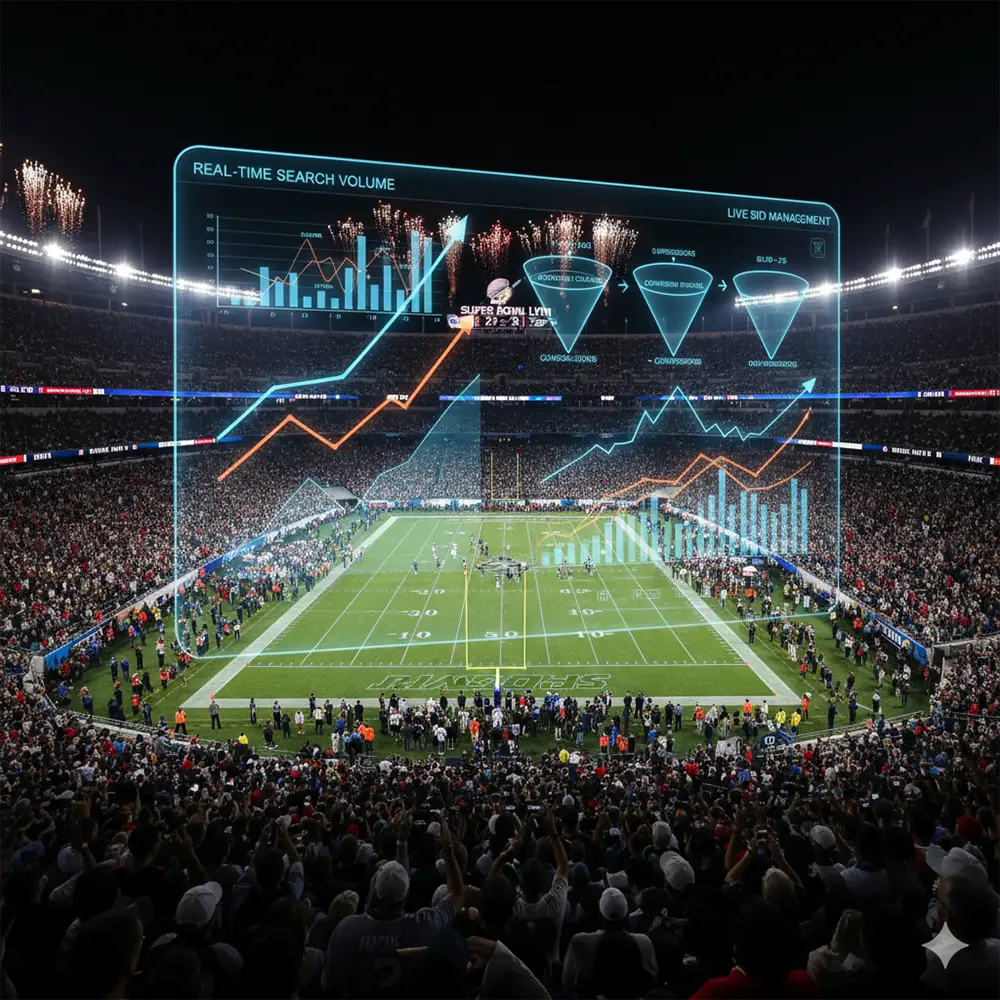
High-volume live events represent critical deployment environments for digital advertising infrastructure. This document evaluates a legacy (2015) search architecture designed to capture ancillary search volume generated by a major broadcast event. It preserves the foundational methodology of capturing ancillary intent while contrasting it against current real-time, algorithmic deployment protocols.
Architectural Evolution: Real-Time Algorithmic Execution
Legacy live-event architectures prioritized the capture of pre- and post-event search queries via static text assets. Current deployment protocols require real-time, multi-channel optimization to capture concurrent audience engagement.
- Concurrent Hardware Engagement (Second Screen):
Contemporary audience metrics demonstrate concurrent utilization of multiple hardware devices during broadcast events. Modern architectures must optimize for this divided attention, targeting real-time queries regarding broadcast events or related commercial assets.
- Algorithmic Inventory Aggregation (Performance Max):
Legacy deployments utilized segregated structural silos for search, display, and video assets. Current architectures deploy Performance Max configurations, utilizing algorithmic optimization to deploy multimedia assets dynamically across the entire network (YouTube, Display, Search) to maximize conversion probability.
- Real-Time Strategic Modulation:
Event-driven commercial engagement requires continuous monitoring and real-time response capabilities. Modern strategies necessitate pre-configured asset variants ready for immediate deployment triggered by specific event occurrences.
Standard Operating Procedure: Phased Deployment
Live-event deployment requires a phased operational protocol to optimize for fluctuating intent parameters.
- Phase 1: Pre-Event (Awareness Generation).
Initiated 14 days prior to the event, operations prioritize broad semantic targeting (e.g., event scheduling, commercial previews). The primary objective is early demographic capture and awareness generation.
- Phase 2: Intra-Event (Real-Time Optimization).
During the broadcast window, operations transition to capture high-intent, immediate queries (e.g., localized services, real-time multimedia access). Automated bidding protocols are required to manage volatile search volume spikes efficiently.
- Phase 3: Post-Event (Retrospective Analysis).
Post-broadcast operations (typically a 48-hour window) prioritize capturing retrospective queries (e.g., broadcast summaries) and secondary commercial intent (e.g., relevant merchandise).
The subsequent section outlines the original 2015 architectural blueprint. This methodology details the strategic utilization of ancillary search volume, a foundational principle for entities lacking primary sponsorship status.
Legacy Deployment Analysis: Ancillary Demand Capture
Macro-level broadcast events (e.g., the Super Bowl) generate unprecedented search volume spikes. While primary broadcast commercial inventory requires significant capital expenditure, digital deployment architectures permit non-sponsoring entities to capture ancillary search intent.
The operational strategy for non-sponsor entities involves leveraging this seasonal volume spike to promote relevant localized or peripheral services. For example, local hospitality providers deploy targeted geographic parameters, while retail entities target event-specific party planning queries. This methodology requires identifying and capturing tangential semantic volume.
Semantic Architecture: Keyword Portfolio Generation
Legacy semantic architecture relied on analyzing historical search volume trends to generate segmented, client-specific keyword portfolios. Structural clusters were activated dynamically to capture localized demand spikes. Primary semantic categories included:
- Catering and Event Planning:
Targeting specific semantic variants (e.g., "event recipes," "localized delivery").
- Retail and Merchandise:
Targeting specific participant-related apparel and merchandise queries.
- Hospitality and Logistics:
Targeting high-value, immediate-intent queries for localized accommodation and event access.
- General Broadcast Information:
Targeting broad informational queries (e.g., scheduling, participant data) to capture top-of-funnel traffic.