

Journal · Guide
Selling atmosphere, not just square footage.
Published May 4, 2026 · Updated July 19, 2026
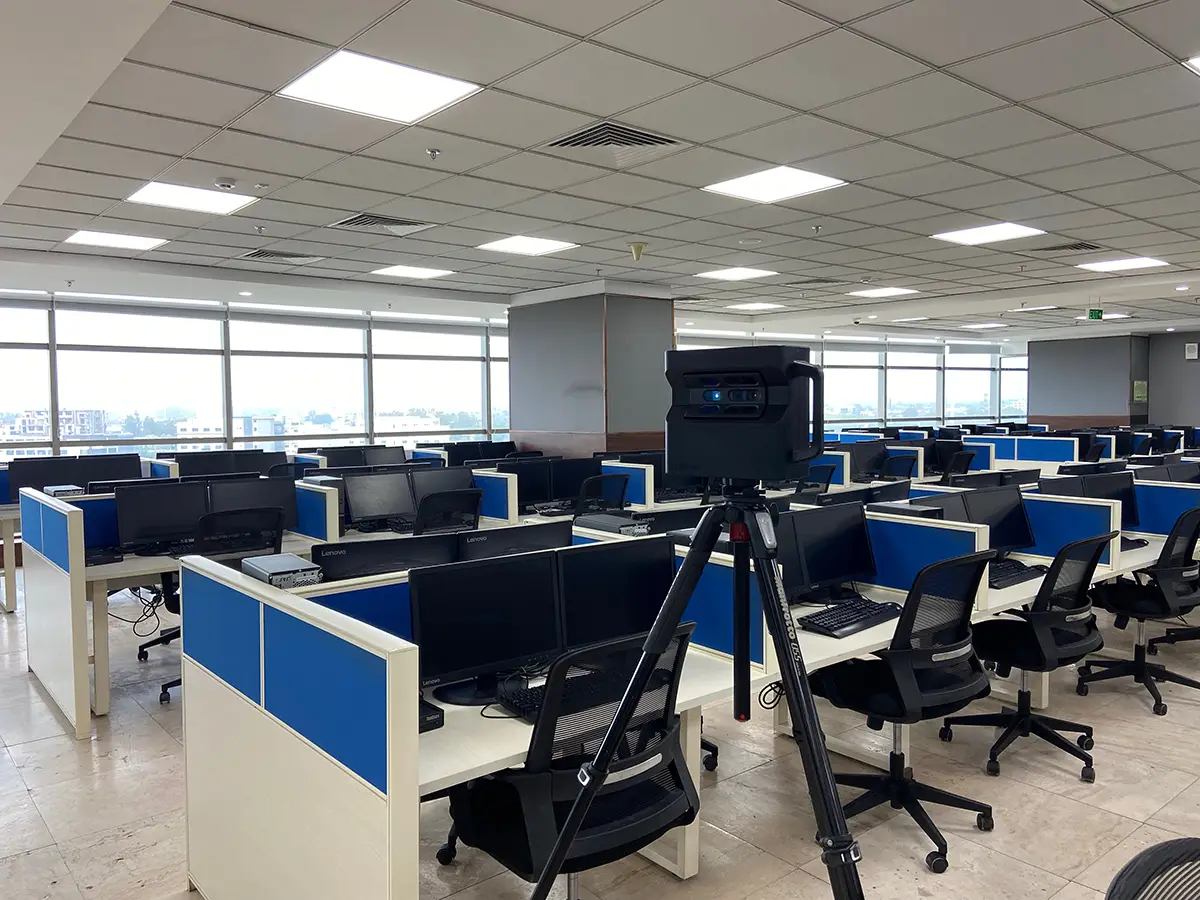
A coworking space sells something harder to photograph than most real estate: the feeling of a room, not just its dimensions. A walkable tour does a better job of that than a photo gallery ever will. A prospective member can actually get a sense of a desk row, a phone booth, a meeting room, before ever visiting.
Hanto Workspace, Bangalore
The clearest example of this here: Hanto Workspace, in HSR Layout, Bangalore, a coworking office scanned in full, desks, meeting rooms, and communal areas included. A remote prospective member can walk the whole space and get a genuine sense of layout and density before booking a visit, which matters more for this kind of space than it does for a home or a hotel room. Coworking is sold partly on atmosphere, and atmosphere is exactly what a static photo struggles to convey.
A smaller office space in Kolkata, in the Merlin Matrix building in Sector V, the city's IT and BPO corridor, was documented too, though it's on record now mainly through its highlight video rather than a confirmed still-live interactive tour.
What this actually supports
On scope: the following is what this kind of scan can support, not a list of things delivered as a formal service on these two projects specifically.
A walkable tour lets a corporate lead check desk density and meeting room size before a physical visit, which shortens the sales cycle for exactly the leads worth prioritizing. It also gives a new member an unfiltered first look at a space: no gap between marketing photos and physical reality, since the scan is dimensionally real, not styled. Mattertags can mark specific amenities (a phone booth, a printer station, an access point) directly inside the space, which is a useful orientation tool for a new member's first week.
Before you ask
Worth knowing.
Is there a real coworking project on this site?
Yes. Hanto Workspace in HSR Layout, Bangalore, scanned in full: desks, meeting rooms, and communal areas.
Is the Kolkata office space tour still live?
Uncertain. It's documented on video, but not confirmed as a currently active interactive tour.
Can this be linked to a booking system or facility software?
Mattertags can mark specific locations inside a space with information, but connecting that to an actual booking or facilities system is a separate integration project, not something delivered here as standard.
Start a project
Tell us about the space, and we'll tell you what it'll take.
Most replies come within a day. Most enquiries start with a short email about the space.
Email info@adostrophe.com